(Sung to whatever tune you like, however, if you pick a tune that does not lend itself to ballads, I cannot guarantee full satisfaction. Or you can just recite it, that works just as well)
There once was a man named Johnny Burgoyne
And with him the British hopes would conjoin.
He was a great dramatist, writer of plays
But discussing them must wait for later days:
http://en.wikipedia.org/wiki/File:BurgoyneByReynolds.jpg
Now Johnny lived in troubling times
The colonies accused the British of crimes
So the British got mad and fired some shots
Or was it the colonists, with sinister plots?
But figuring that out is merely chatter
It really and truly doesn't matter.
Back to the story, the countries were fightin'
And a brilliant plan, the British were writin'.
The key, they thought, was the Hudson Valley
Capturing it would end the rebel rally.
So Britain assembled three generals to deploy:
Generals Howe, St. Leger, and Johnny our boy.
Howe would advance from the region's south
Travelling up from the river's mouth;
From the west would St. Leger burst forth
Leaving Burgoyne to swoop in from the north.
http://www.nfbny.org/Chapter_News.htm (edited in Paint)
But one man the British failed to behold
Was the general named Benedict Arnold.
He had been defeated, that was for sure
But meanwhile he assembled a sneaky lure.
He knew that the Brits must go by the lake
And so Arnold waited, like a symbolic snake.
The name of the lake was Lake Champlain
And the acts of the British I cannot explain.
They needed the lake, that certainly showed
For in the great forest was nary a road.
But pause did the British, to construct a fleet
Before in battle would they compete.
Arnold's forces were meager and soon destroyed
But 'twas not in vain that they were deployed,
For fast approaching was winter's cold
So the British were forced to retreat, it was told.
If it wasn't for Arnold's tactics of stall
The Brits wouldn't have gone back to Montreal.
http://en.wikipedia.org/wiki/File:USS_Congress_%281776%29.jpg
Though seven thousand, Johnny's troops numbered
It is safe to say they were quite encumbered.
Part of the reason his men had much strife
Was that among them was many a soldier's wife.
And not only that, but between each battle
The men had to carry each item and chattel.
The forest of the north was certainly thick
And so at the ready were axe and pick;
Johnny's men cleared a path straight through the woods
And trailing behind them were extraneous goods.
Progress was slow, that much could be said
And Johnny knew not what lay ahead.
One thing upon which we will surely agree
Johnny would have moved faster, had he an RV.
http://www.guestfirstrvresorts.com/parks/high-sierra-yosemite-camping.html
There exists a climactic subplot now
And it all revolves around General Howe.
In case you've forgotten, Howe's crucial assignment
Was to meet up with Johnny in wondrous alignment.
But Howe concocted a plan of his own;
He wanted the capital overthrown.
The capital was known to the locals as Philly,
And in retrospect the general's plan looks silly,
For Howe spent the bulk of his time there in leisure,
All while Lord North experienced a seizure.
"What is he thinking?" North angrily asked,
"Why is he straying from what he was tasked?"
North screamed and cursed, basically shouted,
"That bloody fool's going to get us routed!"
Perhaps Ben Franklin summed it up best:
"The city captured Howe!" was his witty jest.
http://en.wikipedia.org/wiki/File:Independence_Hall.jpg
Johnny nearly reached Albany, a modest sized city,
And unfortunately for him, things weren't looking pretty.
Militiamen swarmed from the left and the right,
And they wouldn't leave Johnny without a good fight.
The British had embarked on a mission to plunder,
But now their endeavor looked much like a blunder.
The army was trapped, their mission had failed,
Americans all 'round, completely assailed.
The Brits could neither advance nor retreat,
And Johnny was soon to go down in defeat.
His adversary was Horatio Gates,
Who, for his command, ranks among the greats.
Johnny's entire brigade he had to surrender,
While the Americans proved a worthy contender,
Thanks to the Battle of Saratoga,
Johnny could not gain Ticonderoga.
http://en.wikipedia.org/wiki/File:Surrender_of_General_Burgoyne.jpg
Now before Saratoga, the colonial cause
Had come to a frightfully dangerous pause.
It is safe to say that their hopes were slipping,
But Saratoga proved to be quite fate-tipping.
The news of the vict'ry caused singing and dance,
And then the colonists recalled their friend France.
To make this appeal, the Congress chose Ben,
Who as you remember, was skilled among men.
Ben got down to business, he started persuadin',
And soon America, France would be aidin'.
Britain was powerful, for this they were famed,
But with France's help, they would quickly be tamed.
A couple of battles and a few years later,
America escaped their kingly dictator.
And as this yoke of taxation was lifted,
The balance of power had certainly shifted.
And while Johnny's actions proved a deadly gaffe,
I can't help but thank him on our country's behalf.
Now that it's told, this tale is adjourned
I just hope that something intriguing's been learned.
http://www.frenchforfun.com/francophone_community.html
(Random Note: Apparently some guy named Robert Sobel wrote a book about Burgoyne...but...he pretends that Burgoyne won the Battle of Saratoga, and proceeds to create an entire fictional history based on the obvious consequences. For instance, Britain remains more powerful, Thomas Jefferson ends up being hanged, and Mexico ends up as a world power, presumably because the United States does not exist to get in its way. Burgoyne, in the meantime, becomes the first governor of the new British North America. Pretty interesting stuff...my favorite part is that this guy writes the book as if it is actually a history textbook, like, he includes critiques from invented historians, and cites footnotes from phony books and articles. He also remembers to kindly thank all those fictional characters who helped him with the book. The name of the book is For Want of a Nail, and if you're curious, here's some more detailed information on the novel, courtesy of our good friend Wikipedia:
http://en.wikipedia.org/wiki/For_Want_of_a_Nail_%28novel%29
Tuesday, September 28, 2010
The Brilliant Ballad of Johnny Burgoyne

Thursday, September 9, 2010
Pitt's Palms of Victory Pictures (Prepared in Place of Powerpoint) Entrance
This text is here for the purpose of obscuring my pictures when you enter my blog so you don't see them a)ahead of time and b)out of order.
This text is here for the purpose of obscuring my pictures when you enter my blog so you don't see them a)ahead of time and b)out of order.
This text is here for the purpose of obscuring my pictures when you enter my blog so you don't see them a)ahead of time and b)out of order.
This text is here for the purpose of obscuring my pictures when you enter my blog so you don't see them a)ahead of time and b)out of order.
This text is here for the purpose of obscuring my pictures when you enter my blog so you don't see them a)ahead of time and b)out of order.
This text is here for the purpose of obscuring my pictures when you enter my blog so you don't see them a)ahead of time and b)out of order.
This text is here for the purpose of obscuring my pictures when you enter my blog so you don't see them a)ahead of time and b)out of order.
This text is here for the purpose of obscuring my pictures when you enter my blog so you don't see them a)ahead of time and b)out of order.
This text is here for the purpose of obscuring my pictures when you enter my blog so you don't see them a)ahead of time and b)out of order.
This text is here for the purpose of obscuring my pictures when you enter my blog so you don't see them a)ahead of time and b)out of order.
To enter the realm of amazing, click here.
Pitt's Palms of Victory Pictures (Prepared in Place of Powerpoint) Part VIII

Surely you didn't think you would view an entire presentation from me without seeing at least one map? Seriously, this map does an excellent job of illustrating the great loss of territory France experienced with the peace settlement. All the pink and yellow territory was previously French, but was turned over to other European powers after the Treaty of Paris.
(Speaking of treaty of Paris, have you ever noticed how saying "Treaty of Paris" is ridiculously ambiguous? There are at least twenty of them...you'd think the people signing treaties would get tired of Paris after a while...http://en.wikipedia.org/wiki/Treaty_of_paris)
To complete your journey through the realm of amazing, click here.
Pitt's Palms of Victory Pictures (Prepared in Place of Powerpoint) Part VII

To advance further into the realm of amazing, click here.
Pitt's Palms of Victory Pictures (Prepared in Place of Powerpoint) Part VI

This picture represents what little French influence remained in America following the war. Other than Haiti, the French were only a minority in certain areas, such as Louisiana and Canada (specifically Quebec).
Incidentally, the next picture REALLY has nothing to do with anything, but I found it while I was looking for bilingual stop signs, and I thought it was funny, so I figured I would share:
To see the completely irrelevant picture, click here.
Pitt's Palms of Victory Pictures (Prepared in Place of Powerpoint) Part V

This picture actually has very little to do with the French and Indian War. It is an early Baroque painting from the artist Caravaggio, who is neither French nor British nor Indian (he is Italian). Why then, did I include the picture? There are symbolic reasons, which I will leave up to the audience to discover for themselves.
To advance further into the realm of amazing, click here.
Pitt's Palms of Victory Pictures (Prepared in Place of Powerpoint) Part IV


Can you spot the difference between these two photos of James Wolfe? If you can, you share a quality with the general in charge of the capture of Quebec City. Wolfe possessed painstaking attention to detail, which in part explains his daring bravery during the Battle of Quebec (1759).
To advance further into the realm of amazing, click here.
Pitt's Palms of Victory Pictures (Prepared in Place of Powerpoint) Part III

Poor Louisbourg. It seemed to be the default American battleground between Britain and France in the 18th century. Indeed, Louisbourg proved to be the first significant victory for the British in the French and Indian War.
To advance further into the realm of amazing, click here.
Pitt's Palms of Victory Pictures (Prepared in Place of Powerpoint) Part II

William Pitt was so loved by the common people, as he was endearingly called "The Great Commoner" by his contemporaries. In signs of admiration, the people would often kiss his horses, which may or may not have been pleasing to the equine.
To advance further into the realm of amazing, click here.
Pitt's Palms of Victory Pictures (Prepared in Place of Powerpoint) Part I

William Pitt was an imposing figure, possessing "flashing eyes" and "a hawklike face". Whether or not that actually helped him to win the French and Indian War for the British is up to debate.
To advance further into the realm of amazing, click here.
Tuesday, August 31, 2010
A Great Post about the Great Awakening
Explain what the Great Awakening was, and assess the extent to which it, an intensely religious movement, contributed to the development of the separation of church and state in America.
The Great Awakening was a religious movement that swept across America in the early to mid 18th century. The Puritan Church had gradually been weakened by various "heresies" and new ideas, such as those of free will and tha humans are not necessarily predestined and can save themselves through good works, began to take root. Many felt that the church had become severely weakened, as, in response to these ideas, conversion was not necessary for church membership. The church need some serious revival. Thus, new preachers such as Jonathan Edwards and George Whitefield took center stage (in Whitefield's case, almost literally!). Through sermons rich in imagery and emotional language, Edwards and Whitefield infused the Puritan (now Congregational) Church with new life.
The Great Awakening shifted the focus on religion more fully onto the individual. While the original Calvinists had emphasized individual religious devotion, such as individual, rather than communal, interpretation of the Scriptures, many other aspects of the Calvinist Church had become rather communal in nature. For instance, the Puritans who came to inhabit the Massachusetts Bay Colony were very tightknit and were a religious clique, in a sense. This clique became so obsessed with maintaining their spiritual purity that they made rules, governmental rules, to protect it. Over time, as the spiritual purity was challenged, the original intent of the rules was forgotten, and it was evident that the Church and state had pretty much been mixed. The Salem Witch Trials bring home this very point. The Church had become the entire reason why government was existing at all, and through generations of colonists, the religious devotion had been forced by a political power, and was therefore superficial.
However, according to the ideals of the Great Awakening, religion was solely individual devotion. This devotion was strongly imbued with emotion and spirit, and this was not pleasing to many older believers, who represented the hierarchy of the Church/state. The authority of the Church had passed on to ministers, such as Edwards and Whitefield, who had no affiliation with the government of the Bay Colony. The government no longer mandated religious rules, and thus could focus on political matters. Thus the Great Awakening strengthened both Church and state, because each could focus on matters more directly, and the boundary between the two was not muddled. In the aftermath of the Great Awakening, only two "established", or tax-supported churches existed in the colonies: the Congregationalists and the Anglicans (who were obviously mixed up in state affairs in the first place, what with the interests of the English crown). Many more denominations developed because of the Awakening, and all of these churches interpreted spiritual matters without the use of a stately authority.
Tuesday, August 10, 2010
Satisfaction of Curiosity I Never Knew I Had
NOTE TO THOSE READING MY BLOG, PARTICULARLY THOSE READING MY BLOG FOR THE SPECIFIC PURPOSE OF GRADING SAID BLOG: THIS POST IS NOT A HOMEWORK ASSIGNMENT IN ANY WAY. HOWEVER, AFOREMENTIONED READERS OF MY BLOG WILL PROBABLY FIND THE INFORMATION CONTAINED HEREIN TO BE INTERESTING. IF YOU ENJOY READING INTERESTING THINGS, AND I SUSPECT THAT YOU DO, I SUGGEST YOU CONTINUE READING. IT ALSO TOOK A REALLY REALLY REALLY LONG TIME TO TYPE, SO I WOULD BE VERY HAPPY IF YOU READ IT, EVEN IF YOU DON'T READ IT ALL.
During class discussion on Monday, our most wonderful instructor mentioned that many of the place names in the United States have Native American origins. Using the example of Alabama, which itself comes from a Native language, we were able to identify several examples that originate from Native words. Tuscaloosa is an excellent example. Of course, not all place names in Alabama are Native words, for instance, Birmingham is obviously named for the British city with the same name.
As a geography aficionado, I immediately became curious. What percentage of places in the United States owe their name to the Native Americans? Just how much of our country managed to withstand the influence of Europeans, at least nominally? Now, obviously it would be impossible to count every single geographic feature that has a name, and record just how many are of Native origin, etc, etc. But consider just the names of the fifty states. How many states are named with a Native word (or a corruption of a native word)?
Because many of the origins of the names of the states are actually rather interesting, I will first post a list of all the states with their origins for reference:
- Alabama: (Choctaw) Experts believe the word Alabama originated from two Choctaw words: "alba", meaning "plants" or "weeds", and "amo", meaning "to cut" or "to gather".
- Alaska: (Aleut) The name Alaska comes from the Aleut language, from the word "Alyeska", or originally, "alaxsxaq" (I'd like to hear someone pronounce that!). The word simply means "mainland" or "great land", but the literal translation is more involved: "the object towards which the action of the sea is directed."
- Arizona: (Spanish/Basque) There are two possible origins of the word Arizona. Some historians believe the word comes from the Spanish "zona arida", simply meaning "arid zone". Most, however, believe the name derives from the Basque "aritz ona", or "good oak". Either way, the name is of European origin.
- Arkansas: (Quapaw/Sioux) Actually, the word Arkansas is a French pronunciation of the Quapaw word "akakaze", meaning "land of dowriver peoples", or the same word in Sioux, meaning "people of the south wind". By the way, the word "Arkansas" is pronounced AR-can-saw, not ar-CAN-suhs. It does not rhyme with Kansas, pronounced CAN-suhs. However, this was actually an issue, and the pronunciation was made official by the state legislature! (Some people, however, mostly people from Kansas, still use the incorrect pronunciation.)
- California: (Spanish, and very slightly Arabic) The name California actually comes from a myth, about a Queen Califia (probably from the Arabic title "caliph"), who ruled a land dominated by griffins and other beasts. This story is told in The Exploits of Esplandian by Garci Rodriguez de Montalvo. If it sounds like I'm making this up, well, I'm not surprised, but I'm not making it up!
- Colorado: (Spanish) If you just read about the origin of California, I apologize for the relative dullness of Colorado's origin. The word "colorado" literally means "colored" in Spanish.
- Connecticut: (Mohegan) Connecticut comes from another word that is difficult to pronounce, "quonehtacut", which means "place of long tidal river", referring to Long Island sound that runs along its southern coast.
- Delaware: (English) The origin of Delaware should be familiar to anyone who completed the chapter 2 study guide, as it is a corruption of the title of Thomas West, 3rd Baron De La Warr, who of course was the colonial governor of (ironically, not Delaware) Virginia.
- Florida: (Spanish) Juan Ponce de Leon, another familiar name, named Florida, which means "flowery land", because it was the Easter season at the time (known to the Spanish as "Pascua Florida", or "flowery Easter")
- Georgia: (English) As might be expected, Georgia was named for a George, specifically, King George II of England, who was ruling at the time. (For anyone who is curious, like me, who had to look it up, the country of Georgia is named for St. George, not a British monarch. I always wondered how places so far apart ended up with the same name...)
- Hawaii: (Polynesian) Hawaii is obviously an exception, but it is an interesting exception. The word Hawaii, in most Polynesian languages, such as Maori, Samoan, and Rarotongan, means "homeland". However, in Hawaiian, where the meaning would make sense, the word has no meaning!
- Idaho: (Unknown) Idaho has probably the most intriguing origin of any of the state names. There are several proposed origins, including the Apache word "idaahe", meaning enemy, but there is a much more interesting story to be told. When Congress was organizing the state of Colorado for statehood, they were trying to decide on a name. A lobbyist by the name of George M. Willing proposed the name "Idaho", claiming that it derived from the Shoshone word meaning "gem of the mountains". Thinking they were clever, a community in what would become Colorado named themselves Idaho Springs. However, Congress eventually named the territory Colorado, but a steamship in the Northwest was named Idaho, and the real state of Idaho eventually used this name. However, before that, Willing confessed that he had actually invented the story, and that he made up the word Idaho. Many textbooks, however, would continue to use Willing's "Idahoax" as the correct etymology.
- Illinois: (Ottawa) Again, Illinois is a French corruption of a native word, specifically the word "irenwewa", becoming "ilinwe" in the Ottawa language, and the word means "he speaks the regular way". On a related topic, have you ever noticed that some languages have words for the strangest concepts?
- Indiana: (Sanskrit) What?!? Sanskrit?!? Isn't that spoken in India...? Well, really, that is the origin of the name "Indiana". The word merely means "land of the Indians", which of course referred incorrectly to the Native Americans and was applied by Europeans, but it doesn't really originate with either of them. Since Europeans (Columbus, really) thought they were in the Indies, which come from India, where did the word "India" come from? It derives from the name of the Indus river, which shares a root with the word "hindu", as in the religion. These words all came from Sanskrit. Incidentally, there is only one Hindu temple in Indiana...
- Iowa: (Dakotan) Iowa derives its name from the Ioway tribe, but was named in part due to European ignorance. The Ioway tribe did not call themselves "Ioway", but rather "Baxoje". However, Europeans heard the neighboring Dakotan tribe call the tribe "Ioway", from the word "ayuhwa", so the name stuck. The word "ayuhwa" means "asleep", by the way.
- Kansas: (Quapaw/Sioux) See Arkansas.
- Kentucky: (Iroquoian) Kentucky's origin is disputed, but it probably comes from the Iroquoian word "kenhtake", meaning "meadow" or "prairie".
- Louisiana: (French) The name Louisiana is straightforward, it merely is named after the Sun King, Louis XIV, who ruled France at the time Rene-Robert Cavalier, Sieur de La Salle claimed the entire land drained by the Mississippi River (a rather bold claim, I might add).
- Maine: (French/English) Maine is either named for the French province of the same name, or is named Maine in English as short for "mainland".
- Maryland: (English, mostly) Maryland seems straightforward enough, it is probably named for a Mary, right? Well, sort of, it was actually named for a Maria, specifically, Henrietta Maria, wife of King Charles I of England. The Latin name, "Terra Maria", was used for a time, but eventually the English name was used exclusively because the Latin reminded the English settlers too much of Spanish, who of course were colonial rivals with England.
- Massachusetts: (Massachusett) This tribe should be familiar with readers of Mayflower, but, looking into the origin of the tribe's name, for which the state is obviously named, proved paradoxical. The name is a combination of several words, "mass", meaning "large", "adchu", meaning "hill", "s", a suffix meaning "small", and "et", another suffix indicating a place. So Massachusetts means "small large hill"? I'm confused.
- Michigan: (Ojibwe) The origin of Michigan is a "well, duh!" origin. It merely comes from the French pronunciation of the Ojibwe word "mishigama", meaning "large water" or "large lake."
- Minnesota: (Dakotan) Minnesota's origin has a cool story behind it. The name comes from the Dakotan word "mnisota", meaning "sky-tinted water" or "somewhat clouded water." To give the name of the land to the Europeans, the Natives took milk and poured it into the river, creating a clouded effect, and calling it "mnisota." The name obviously stuck.
- Mississippi: (Ojibwe) Mississippi has a very similar origin to Michigan, both coming from the Ojibwe language, and both referring to prominent water features. Mississippi, of course, refers to the river, coming from the word ""misizlibi", meaning "great river."
- Missouri: (Sioux) Missouri seems easy enough to say, but try pronouncing "ouemessourita", or "wimihsoorita", both spellings of the Sioux word from which the state is named. It means "those who have dugout canoes."
- Montana: (Spanish) Montana is like Colorado, in that it comes almost directly from Spanish. The word "montaña" (the ~, or tilde, was of course anglicized away) merely means "mountain", which, given Montana's landscape, is quite appropriate.
- Nebraska: (Otoe) Nebraska comes from the words "ni brasge", meaning "flat water", referring to the Platte River that runs the length of the state.
- Nevada: (Spanish) The Spanish seem to be much simpler with their names than other peoples; the word "nevada" simply means "snowfall."
- New Hampshire: (English) Most of the "new" states are also straightforward in their origin. Simply remove the word "new." In this case, "Hampshire" is an English province, home of writers Jane Austen and Charles Dickens, in case you were curious.
- New Jersey: (English) See New Hampshire. "Jersey" is an island off the coast of France that belongs to England.
- New Mexico: (Aztec) See New Hampshire. "Mexico" is a fairly large nation that borders the United States to the south (in case you weren't aware...). However, the name "Mexico" comes from Aztec (somehow; there are many possible derivations, too many to list here), which makes sense, given that present-day Mexico was dominated by Mexico before Cortes came.
- New York: (English) See New Hampshire. "York" is a city in England.
- North Carolina: (English) Like many of the original colonies, the Carolinas were named for a British monarch, this time Charles I (even though Charles II issued the charter, he named it for his father). "Carolina" is simply a loose variant.
- North Dakota: (Dakota/Lakota) The Lakota tribe, originally called the Dakota tribe (ironically, during the period when they did not live in the present-day Dakotas, but rather in the Great Lakes region) gives its name to the Dakotas. The word "Lakota" means "friendly" or "allied."
- Ohio: (Iroquoian) If all the state names were translated into a single language, two of them would have the same name. Ohio comes from the Iroquois word "ohiyo", meaning "great river" (referring, of course, to the Ohio River). As you might recall, Mississippi also means "great river".
- Oklahoma: (Choctaw) Oklahoma's name derives from the fact that it was destined to become home to a great number of Native American reservations, as it comes from the words "okla humma", meaning "red people."
- Oregon: (French, for the most part, a tiny bit Miami, perhaps) Oregon has two stories behind its name. One simply asserts that the name comes from the French word "ouragan", meaning "hurricane" (referring to the gusty winds in the Columbia River). Another theory is more interesting, and it contains a geographical error (maybe, if I ever have a lot of time on my hands, like tonight, I'll make a list of places that were mistakenly named). On a 1700's French map, the name of the Wisconsin River (which, by the way, Wisconsin isn't really all that close to Oregon...), which at the time was spelled "ouisiconsink", was misspelled as "ouaricon-sint", with the "-sint" wrapping around to a second line. Thus, people assumed there was a river to the west called just "ouaricon", which perhaps is the origin of the name of Oregon.
- Pennsylvania: (English) Pennsylvania was named for William Penn, the founder of the colony, and the name means "Penn's Woods." Penn himself wanted to call the colony "Sylvania", fearing that people would think he named it after himself, but King Charles II refused to change the name once the charter was issued, and the name stuck.
- Rhode Island: (Greek/Dutch) There are two stories behind the name of Rhode Island (which, by the way, is technically called "Rhode Island and Providence Plantations", meaning that the smallest state in area has the longest official name). One is that the explorer Giovanni de Verrazanno noticed an island in the area that resembled the Greek island of Rhodes. Another possible origin is that the name comes from the Dutch words "roode eylant", or "red island."
- South Carolina: (English) See North Carolina.
- South Dakota: (Dakota/Lakota) See North Dakota.
- Tennessee: (Muscogee) Tennessee probably originates from a random native village that Europeans encountered in the area, which was known as "tanasqui."
- Texas: (Caddo) Texas is another example of a misnamed Native American tribe. The Caddo tribe, which lived in the region, had a word, "texas", that meant "friend" or "ally." However, the Spanish called the Caddo by this name, indicating friendly relations (at first, anyway) between the two, and the name was soon applied to the entire region.
- Utah: (Ute) Utah means "people of the mountains" in the Ute language, and the word often applied to the Ute people themselves.
- Vermont: (French) Vermont is named for the mountain range that runs down the state, today called the Green Mountains (in French, "les monts verts").
- Virginia: (English) The colony, and later state, of Virginia is named for Queen Elizabeth I, who was called the "virgin queen" because she never married.
- Washington: (American!) Washington is simply named for George Washington, the first president of the United States.
- West Virginia: (English) See Virginia.
- Wisconsin: (Miami) See Oregon (it will make sense when you see it, if you haven't already). The original name of the Wisconsin River means "it lies red", "red stone place", "gathering of the waters", or "great rock."
- Wyoming: (Munsee) Like Oregon, Wyoming derives its name from areas of the United States farther east. The name comes from the Munsee word "xwewamenk", meaning "at the big river flat", but this name was originally applied to the Wyoming Valley - located in Pennsylvania.
By the way, I got all this information from Wikipedia. I know, I know, technically I shouldn't be using Wikipedia. But technically, this isn't a homework assignment (remember?), it's just for fun. Besides, I find that Wikipedia is the most awesome website ever for quick reference.
So, the original question: how many states owe their name to native words? By my count, no less than 26 states have a name that originates (or may originate) with a word from a language of any of the various Native American tribes. That is over half of the states! Clearly, Native Americans had quite an influence on the names of the fifty states.
However, what struck me while I was researching the names of the states (which became tedious, but was very fascinating) was the great variety of origins. In addition to the plethora of Native American tribes that donated words to our states, the names of our states come (or may come) from Spanish, English (including some monarchs), French (including one monarch), Dutch, Greek, and one state named for an American. In more bizarre examples, some states were named for a complex intersection of Arabic leadership in Spanish mythology, or a Sanskrit religion, or a Polynesian word that became obsolete for the group that it best describes. Additionally, some of the names accidentally came about because of Italians (most notably Columbus and Verrazano).
I think this is awesome. It speaks wonders for the diversity of the United States. The names of our states came from all over the planet! Personally, I found all this information to be highly interesting, though I am a trivia nut, so perhaps it isn't surprising. However, I think the best use of trivia is sharing it with other people, so I am putting this out here for anyone who wants to read it (sorry I made it so long...). If you have made it this far to the end, I hope you enjoyed reading my enormous post. Leia Mais…
Monday, August 9, 2010
The Quintessential American Landscape

Source: http://upload.wikimedia.org/wikipedia/commons/thumb/f/f3/Dean_Franklin_-_06.04.03_Mount_Rushmore_Monument_%28by-sa%29-3_new.jpg/283px-Dean_Franklin_-_06.04.03_Mount_Rushmore_Monument_%28by-sa%29-3_new.jpg
My choice of the quintessential American landscape needs some brief (or, as I discovered after I typed all this out, maybe not so brief) explanation. Presented with the challenge of finding an American landscape, I sought to find the landscape that represented as much of what makes up America as I could. At this moment, I would not be surprised if those reading this are screaming at their computer screens right now, claiming that I am ignoring their favorite part of the American story. I am not claiming to wholly represent America, as that would be nearly impossible in one image (even if it is worth a thousand words). However, here are some things to consider concerning the image:
As many of you probably already know, the sculpture before you is Mount Rushmore, which is located in the western portion of South Dakota. It depicts four past presidents of the United States, which can obviously represent the American ideal of a democratic, popularly supported government. However, each of the presidents tells an additional story about the American experience. George Washington symbolizes the founding of the nation, reminding us of the colonial roots with England. Thomas Jefferson represents the great expansion of the United States, with the acquisition of the Louisiana Purchase. Abraham Lincoln, of course, led the nation through the most difficult stretch in its history, the Civil War. Finally, Theodore Roosevelt was committed to the preservation of the nation through the establishment of the National Park Service.
In the summer of 2008, I had the great pleasure of travelling to western South Dakota, and I can attest to even more American ideals that this picture represents. First, the influence of Native Americans, specifically the Sioux, is huge. In fact, another great memorial, dedicated to Crazy Horse, is in progress not too far from Mount Rushmore. Some small towns in the area also depict various aspects of Americana. Sturgis holds a famous motorcycle rally annually, and, at least to me, this is representative of the American idea of individuality and freedom from authority, as the cyclists are quite the individuals. Another town, Deadwood, is famous for the legends of Wild Bill Hickok and Calamity Jane, and symbolize the phrase "Wild West", which of course is a significant American subculture.
Finally, South Dakota is rather diverse geographically, though you wouldn't know it from the eastern portion of the state. From the towering Black Hills to the forbidding dryness of the Badlands, from the rushing waters of the Missouri River to the rolling Great Plains, South Dakota as a state perhaps represents the diversity of America better than most. Also, South Dakota is, by far, NOT urban, representing the relatively untouched continent that Europeans set foot upon 500 years ago.
So, in review, my landscape represents democracy. It represents the birth of a nation, and the subsequent success it soon enjoyed. It represents the dark times of the Civil War, and it represents the desire to preserve the beauty of the lands for future generations. It represents the Native American experience. It represents the idea of individual rights, and it represents the American legend and mythology. It represents the diversity of the continent, both demographically and environmentally.
Ideally, I would have displayed a landscape depicting the whole of South Dakota, but unfortunately, it is too large to fit in one photograph. Thus, I chose Mount Rushmore, because it is probably the image people most associate with the state (a quick search of Google images confirms this; after you get past a couple of maps of the state, Mount Rushmore is first). If asked to pick one state representative of America, I highly doubt people would choose South Dakota immediately. However, it makes sense, given that it contains the geographic center of the United States. No wonder it blends the aspects of American culture so seamlessly!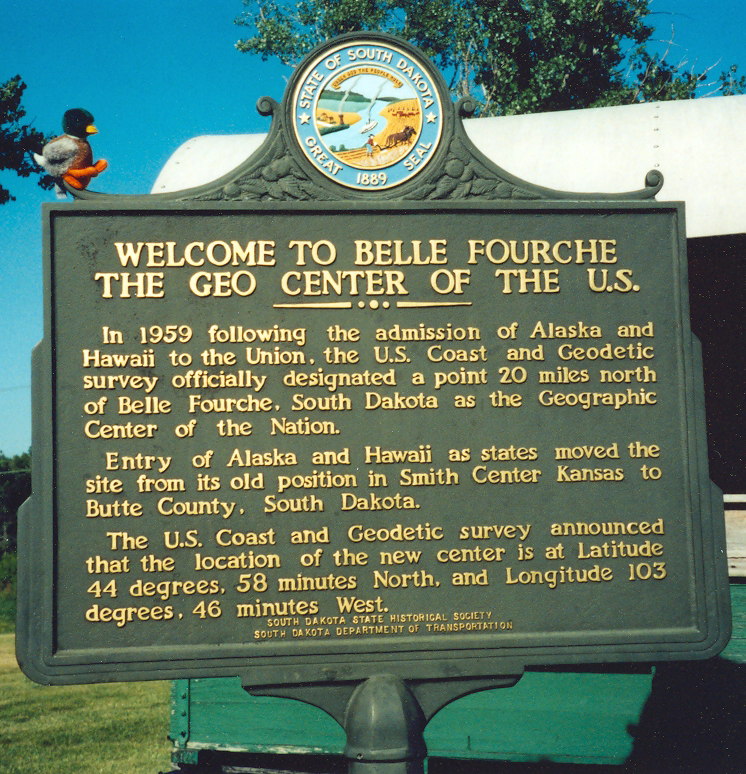
Source: http://upload.wikimedia.org/wikipedia/commons/8/80/Belle_Fourche.jpg
Tuesday, August 3, 2010
Song 15: We Didn't Start the Fire
I have to agree with Mrs. Lawson on this one. Billy Joel released this in 1989, and it reminds me of a history lesson that turned into a train wreck. I mean, as Mrs. Lawson said, it does offer a long list of terms, but not much else. And, quite frankly, only about half the terms (if that much) are even relevant to history; the rest are a mishmash of pop culture, sports, and other randomness.
While the song was catchy enough to get stuck in my head, I don't think it really helps reveal much in the way of a story (unless you are telling a story about Marilyn Monroe appearing on Wheel of Fortune in the Bay of Pigs, and, come to think of it, that might be an amusing story...). If you lived in the era of post World War II, perhaps hearing the terms again would evoke memories from the Eisenhower administration. However, if you didn't live it, it just doesn't work. Even though I have studied that era before, the terms are meaningless without context. I applaud Joel for his rapid fire lip work; it must have been incredibly difficult to run through all those lyrics on the first try, but I wouldn't recommend the song to anyone trying to study for a history exam, because all it would do is confuse them.
Song 14: The Hands That Built America
U2 first recorded this song in 2002. Personally, I think it does the best job of capturing the entire American story (though it does have the advantage of having been the most recent of the songs). We, as Americans, have endured a long journey, with many twists and turns along the way, but still, we are a strong and proud nation, built on the contribution of many people with many different backgrounds. It evokes a rather dreamy mood, and it contains very evocative language, particularly the phrase "watercolor sky". You can make an unlimited number of colors, and together, they can be used to paint a brilliant picture (or sky, in this case) that reflects America as a whole.
This song was my favorite from the track. Although September 11 is a distant memory for me (I can't believe it was almost 9 years ago!), I can see how it would give an even more powerful message in 2002, when it was released. Particularly for Americans whose heritage is from the Middle East, many immigrants feared being mistreated by fellow Americans, who all of a sudden feared outsiders. However, this song served as a reminder of what America really was meant to be: a country for all, built by all, shared by all. I personally find that message to be beautiful, and I really enjoyed the song.
Song 13: The Times They Are A-Changin'
Bob Dylan wrote this song in 1964. His song is a call to all people, telling them that they had better wake up and realize that things are changing, or they will drown in the waves of progress. Dylan could not have been more right. In 1964, many things were happening that had never happened before. Television was becoming a major media influence on Americans, people were being launched into space (and eventually, would land on the moon), Kennedy had just been assassinated, American troops were landing in Vietnam, the Civil Rights movement was going strong, hippies were creating their own special sub-culture...etc, etc. It is hardly surprising that so much was changing, as the baby boomer generation was beginning to come of age in the sixties.
The way Dylan sings his song, he reminds me of a wise old guru who is giving advice to those younger than himself. He certainly makes his point, and the point is that America was experiencing change at a rate that had never been seen before. It is like a boulder at the top of a large hill. You give it a push, and it hardly budges. However, once it starts rolling, it is not going to stop, and it will just keep rolling down the hill, and all you can do is hang on and enjoy the ride. Essentially, Dylan is telling people to grab tight to that boulder, because media is just going to make the boulder go faster and faster. For people of the present-day, Dylan must look like a very wise prophet indeed.
Song 12: Youngstown
This song was written in 1995, by Bruce Springsteen, but it reflects an era long before. In the years following the Civil War, the area around the Great Lakes, including the namesake of the song, Youngstown, Ohio, became a great center of industrial production, particularly of steel. Factories dotted the landscape, and the fates of the cities revolved around these factories. Today, however, tells a different story. Many of these cities have shrunk in population, as the factories have declined in importance. Also, environmental concerns, such as pollution of the Cuyahoga River or the Three Mile Island accident caused many of the factories to be shut down.
This song is another that reflects the reliance on a particular industry or situation by a group of people, and then portraying the consequences that arise when that industry is removed or loses importance. It seems to put the idea of progress in a bad light. Songs like this remind us of the situation of many of these Youngstown workers, who lost their jobs and livelihoods when the factories ceased production. Springsteen was not really involved in this situation, but unless you knew better, you wouldn't realize it. He tells the story evocatively, and illustrates vividly the transformation that has taken place over the generations.
Song 11: A Change is Gonna Come
This song is a refreshing change from the Depression era songs, which, quite frankly, I found rather depressing (pun intended this time). Sam Cooke was the original writer of this song, back in 1963, but the version we listened to was recorded by Seal. Yet again, there are difficult times in the background of the song, but the narrator is able to find optimism anyway. He has great faith that things will change, and, for the most part, he was right.
While this song was only moderately popular during the Civil Rights Era, it has come to signify the era over the years since. I think it is a very powerful message that certainly typifies the mood. Change was on the horizon, and it was evident because there were people like Rosa Parks and Martin Luther King Jr. leading the way. Myself, I believe in optimism. When things aren't going well, if you just let yourself get defeated, you will get defeated. This song is just screaming optimism. I think that, and the catchy rhythm to it, is the largest reason for this song's popularity. People don't like to face realities, and while, sometimes it is necessary (see song 10), looking ahead to a bright future leads to hope. There were many dark eras in the history of the United States, but the Civil Rights Era, in the end, led to a sense of equality that African Americans had never truly experienced before.
Song 10: Strange Fruit
Billie Holiday wrote this song in 1939, and it conveys a very powerful message. It tells of the lynching of African Americans that illustrated the racial prejudice that still existed in America, sadly. Research tells me that this song was powerful in its own time, for when Holiday would perform it, everyone would become silent and all activity would come to a halt.
This song certainly would not garner popularity because it is fun. No, the entire point of the song is to face reality, even as it is harsh and unpleasant. America is supposed to be a free place, where one does not have to fear being mistreated by the fellow person. Unfortunately, even many decades after the abolition of slavery, African Americans were still atrociously mistreated. Living in the South, I have obviously heard about the Ku Klux Klan, and seen many of their "hideouts" on country roads, but, beyond seeing a Confederate flag out front, or perhaps an article in the paper, the terrible crimes which their members commit were vague and nebulous to me. I find it difficult to relate to the situation, but then again, who but those affected truly can? I commend Holiday for this song, because, even as it is very sad, it faces the truth, and people cannot move forward if they do not face the unpleasant realities that exist within their society.
Song 9: Do Re Mi
Another Woody Guthrie song, also written in 1940, talks more in depth about the Dust Bowl experience. First of all, there are no trees in the Great Plains. The soil completely blew away, so the area was completely useless for anything productive. Thus, the song identifies California as a Canaan of sorts, a promised land for these workers who are in desperate need of jobs. Unfortunately, California has become flooded with migrant workers already, and so for many of these workers, they are in a worse situation than before because they have pinned all their hopes on California. Incidentally, The Grapes of Wrath by John Steinbeck tells very much the same story.
This song reminds me of Paddy's Lament, in a way, in that people are in terrible conditions and seek relief elsewhere. However, I think Americans can relate to this song more easily, because the poor workers seeking relief are their brothers, fellow Americans. Like Paddy's Lament, this song serves as a warning to people, who perhaps think things will be better elsewhere. The grass is not always greener on the other side, and people were probably better off staying put. I can sympathize with the workers affected by the Dust Bowl, however, because personally, if everything around me turned to dust, and there was no way I could make any money, I don't think anyone could seriously tell me that I would be better off staying in Oklahoma.
Song 8: Jesus Christ
Woody Guthrie, another great American songwriter, wrote this song in 1940. At this point, America had already become a world power, and was a capitalist force to be reckoned with (ignoring the Great Depression, which the United States was recovering from). The idea of the song is to suggest what would happen if Jesus Christ were to preach his message to this era. In the end, the rich people of America, the bankers and entrepreneurs, would eventually hand Jesus the same fate he saw in his own time.
Somehow this doesn't surprise me. As a Christian, I know that Christ's message is very difficult to apply to the "real world", which, today, is even more capitalistic than it was when Guthrie wrote the song. I thought the song was very meaningful. It is almost a warning to the audience, that capitalism could eventually lead to the destruction of society, if taken too far. Further research shows that Guthrie was linked to Communist parties in the United States, which also does not surprise me. Perhaps Guthrie, who was from Oklahoma, was wary of capitalism due to the Great Depression. Oklahoma, being in the Great Plains, was hit with a double whammy, as not only did the economy fail, but the entire region experienced the Dust Bowl simultaneously. In today's age of great prosperity, Americans tend to be cocky, and see nothing that can topple our status of world power, but it is important to remember that there were times, like the Great Depression, that completely dispel this notion.
Song 7: Paddy's Lament
Wow. This song, written in 2002, captures a view from immigrants coming over from Ireland, which, due to the potato famine of the 1840's, saw a great number of settlers heading to the United States. Most of these settlers came looking for a new opportunity to rebuild their lives that had been completely uprooted (no pun intended) by the terrible conditions. The typical American view of this phenomenon was that most of these settlers were successful, and the American dream lived on.
However, this song seems to indicate the opposite. The ballad-style lyrics tell of Paddy, who immigrated to the United States, only to be taken advantage of during the Civil War, which saw great bloodshed. Paddy, who had left his family completely, only to be used in war, was obviously angry. However, it was too late for him to do anything, so the song serves as a warning to later generations. As Americans I think it is important that we realize the difficulties immigrants have in this country. While the Statue of Liberty symbolizes openness toward diversity and other people, many people are not allowed into the United States, even as they have a great desire to enter. Also, it is not necessarily easy for the immigrants once they actually do reach the states. There is an entire language and culture barrier, and unfortunately, not all Americans are as tolerant as they should be. To sympathize with America, I do think the Irish immigrants were unlucky, and had poor timing. Perhaps if they hadn't come during the Civil War, their opinions would be different.
Song 6: Hard Times Come Again No More
Stephen Foster! (my parents are from Kentucky, and Foster wrote "My Old Kentucky Home". Also, when she lived in Bardstown as a teenager, my mom worked in a restaurant named for him) One of the great American songwriters, Foster wrote this song in 1854, on the eve of the Civil War, during which it enjoyed immense popularity. It is certainly understandable where the popularity came from. Appealing to the lower classes and the less privileged, the song reminds people to think of the pleasures in life when times are tough.
The song's message is powerfully conveyed, particularly as the vocalist emphasizes the refrain (with a ringing chorus repeating the title). As a poor worker in the Industrial Revolution, I would probably be moved by this message, and it would probably help me to see a light at the end of the tunnel. The middle of the 19th century would prove even more difficult with the Civil War, and this song is representative of its era. Although I doubt this song was originally applied to slaves, if I had not known any better, I would have perhaps assumed that this would be a favorite of plantation working slaves in the South. It certainly sounds like it came straight from the Underground Railroad.
Song 5: Johnny Has Gone for a Soldier
After much use of Google, I could not find the exact date that this song was created, however, given that it is Mark O'Connor, I would guess approximately 1997, give or take a few years (see song 4). The song originally comes from the American Revolution era, so it is a traditional song. It tells the story of "Johnny", who has entered the war effort (obviously the American revolution, but the story can really be applied to any war). By telling the story from the girl's (presumably, by the lyrics, Johnny's lover) perspective, it is evident how war completely disrupts the pattern of everyday life for everyone, not just the soldiers themselves.
This song tells the story of the other side of war, that death is involved, and families get broken up for many years, and possibly forever. Obviously this is strikingly grim compared to the glorious view of taking up arms to serve one's country, as it is a duty. I personally haven't experienced any war tragedies in my family, but I am sure that anyone who has lost a loved one in war can relate to the story of Johnny. War is scary, and while, from a historical standpoint, it can drastically shape the fates of nations, it still drastically alters the perspectives and lifestyles of anyone involved. This song still reflects the American ideals of sacrifice, but it reveals that, when a person is called to duty, accepting the duty of nationhood is not as easy as it may seem.
Song 4: Brave Wolfe
This song was recorded in 1997, as part of Mark O'Connor's album "Liberty!", which was composed for a PBS series, also called "Liberty!", that reflects events prior to and including the American Revolution. Indeed, listening to the song reminded me of the background music to a documentary. I could almost hear a soft-spoken narrator, informing us exactly how General Wolfe died at the Battle of the Plains of Abraham. While the battle's name sounds biblical, it actually occurred in present-day Canada, and was a great turning point in the Seven Years' War, swinging the power balance in Britain's favor. Unfortunately for General Wolfe, the battle also cost him his life.
The song reflects the battle in several ways. First, the trumpet is traditionally a battlefield instrument, so its use in the song gives it momentous importance. Second, the song's tempo, gradually picking up pace, shows how the battle developed, and was ultimately resolved later on in the action. Without knowing the background information about the song, however, it is difficult to really understand what the song means.
However, I enjoyed the song, because I had the benefit of learning about General Wolfe. I think this song does a good job of reminding Americans that events occurred before there was a United States, and that Britain and France was instrumental in shaping the nation that we know today. It also reflects the heroics of the individual (ironically, an Englishman), and shows how one man's patriotism can profoundly shape the course of history.
Song 3: Shaman's Call
This song is also a Native American song; however, it evokes rather different feelings. It is still trance-like, but it contains no strong, driving force like that of the drums in song 2. Rather, a flute is the only instrument that can be heard.
This song suggests an inner spiritual call, as the title, "Shaman's Call" indicates. It is inviting and a bit intriguing, but at the same time, somewhat lonely. It definitely suggests individual feelings, which, as previously stated, reflects much of the American spirit. Perhaps the loneliness demonstrates the eventual loneliness and sadness of the Native Americans, forced from their homelands. In its own era, the song would be indicative of a vibrant culture that flourished before Europeans set foot on the American continent. Unfortunately, that culture has largely been hidden away and lost from modern-day America.
Song 2: Apache Indian Drums
There is something about Native American music that puts me in a tranquil mood. I think the complex interaction of all the instruments tends to be suggestive of the sounds of nature, and for most people, myself included, a secluded part of the outside is a very calm place indeed. Also the steady beat of the drums is very trance-like.
In fact, the Native American culture (which is technically inaccurate; I should say "the many Native American cultures") revolves around nature, particularly in music and religious festivities. Again the influence of religion can be seen on the music. Unfortunately, the Native Americans occupy a sad part of the American story, being forced from their homelands because white settlers wanted the land. While I was listening, I kept this in mind, but I also noticed that, while the beat of the drums remained steady, the other instruments came in and out and performed their own individual part. I think this represents America: one, single, unified dream, represented by the individuals that make up the nation.
Song 1: Virgen Madre De Dios
This song is clearly a religious song (the title, translated from Spanish, means "virgin mother of God"). It is performed in a meditative way, close to a chant. The song seem to be intended to evoke reverence and a sense of awe for God.
As a Catholic myself, who has attended a Catholic school for the past eleven years of my life, I may not have the best perspective in identifying where this song fits in the patchwork of the American heritage. However, attempting to ignore my own personal environment, I think it a bit ironic that this song, while representative of several centuries ago, may even represent today. With a great immigration of Hispanics into the United States, the Spanish subculture is growing more and more. I think this song represents diversity, which is a significant part of what built the United States, and it also reflects religious freedom, also a significant reason many Americans ended up in America.
Friday, July 23, 2010
Mayflower: Question 15
One reviewer of Mayflower asserted that Nathaniel Philbrick “avoid[ed] the overarching moral issues [of his subject] and [took] no sides.” Do you find this to be true? Are there moral lessons Philbrick wants us to learn? If so, what are they?
Upon completing Philbrick's work, I was struck by its definitive, matter-of-fact style, much in the vein of standard Puritan writing, ironically. I do believe that Philbrick took no sides, as he took the monumental approach of neutralizing as much of the story of Plymouth as possible. I find his goal quite admirable, and I believe he produced a work of high quality. It is not easy to avoid taking sides, particularly when one is dealing with such issues as war, race, and the risk of destroying one of the most sacred American experiences.
However, I disagree with the fact that Philbrick avoided moral issues. While his goal was not that of a preacher, in describing the activities of the characters with utmost detail, it was practically impossible to avoid talking about morals at all. Instead, he treats morals just the same as he treats any other aspect of the book: simply by presenting the facts. The people in the story, from William Bradford to Squanto and King Philip and Benjamin Church are all people just like us. They faced major decisions, and faced consequences for their choices, good and bad. While everyone has heard the adage of learning from historical mistakes, it is certainly applicable here. Other than that obvious piece of advice, I think Philbrick is warning present-day people, historians and non-historians alike, not to be too gullible. For generations the myth of the Mayflower lived on, and the ugly details were ignored. Philbrick reminds us of the ever true but unpleasant reality that mankind is not perfect, and rarely are stories as simple as the first Thanksgiving, nor characters as simple as cute little English men and women dressed up in "Pilgrim clothes", or friendly Indians who were, as the story goes, more than willing to assist the Pilgrims. While people like the condensed version, because it makes them feel good, it is rarely accurate, and historians are more interested in accuracy.
Mayflower: Question 12
Philbrick shows that the English, as well as the American Indians, engaged in barbaric practices like torturing and mutilating their captives, as well as taking body parts as souvenirs. Could either side in King Philip’s War make any legitimate claim to moral superiority? Why or why not?
Before considering whether the Pilgrims were morally superior in the wartime conditions, it is necessary to consider their moral practices prior to the war. At a very superficial first glance, it appears that, as Puritans, the colonists of Plymouth were indeed quite morally sound. However, while being virtuous in outward acts, there is an issue: exclusivisity. As "outsiders" from England came and founded various colonies all across New England, the colonists of Plymouth feared being "tainted" by the immoral practices of the newcomers. While this in and of itself is not bad, it did lend itself to creating a sense of haughtiness, a sense that the Puritans were right and everyone else was wrong, because they were inevitably doomed in the eternal sense.
When the war began, in typical European fashion, the English settlers showed no mercy. Perhaps they simply were following the practices of the natives, but the truth remains: if they were really God's elect, did God truly tolerate such cruel and repulsive practices? This was utter hypocrisy on the part of the colonists.
On the other hand, the natives engaged in similar practices. However, to them, war was seen as spiritual, and thus was as important as any other activity. Viewed in this way, the Indians seem morally superior, because at the very least, the war did not cause them to radically revamp their code of values. However, I still do not believe that religion, of any kind, is an excuse for such brutal abuse of human dignity. It is very difficult to be "morally superior" in a wartime environment, but engaging in activities that today would be classified as "crimes against humanity" is no way to give the appearance of being righteous.
Mayflower: Question 11
During King Philip’s War, significant numbers of Native Americans sided with the English. How do you regard those who took up arms against their fellow natives? Do you see them as treacherous, opportunistic, or merely sensible? If you had been a native, which side would you have taken, and why?
The important thing to consider when evaluating the actions during King Philip's War is that, before this, New England had not seen a conflict on such a wide and far-reaching scale. Thus, practically all the Natives were in unfamiliar situations, so it is easy to forgive their decision to turn against their kin. In most cases, the number one priority was safety, and the English, who in most cases were equally desperate, made offers that the natives simply could not refuse. While eventually the Natives may have been opportunistic in attempting to take advantage of the situation (similar to Massasoit and Squanto viewing the arrival of the Mayflower as an opportunity to alter the balance of power), this was probably not the case when natives decided to take sides with the English. I think the Indians were being quite prudent, and I think most anyone in a situation as dire as theirs would act similarly. Calling the natives treacherous would be absurd, because, as previously stated, the Indians were not all united, and conflict arose between them all the time.
Obviously, this varied from tribe to tribe. Strong, powerful tribes, such as the Mohawks, could obviously afford to weigh various decisions, as the consequences were not life and death. However, leaders such as Awashonks, did not have such a luxury, and thus were easily swayed by the English. Had I been in the situation of the Indians, I probably would have taken the safe road, and allied with the English.
Mayflower: Question 10
As Mayflower shows, the American Indian tribes of New England were not a monolith, either culturally or politically. However, the English were not consistently able to think of them as separate tribes with different loyalties and desires. How did misconceptions of racial identity complicate the politics of King Philip’s War?
At the very essence of King Philip's War, the English were mostly against the Pokanokets, and their direct allies. Unfortunately, as the war went on, the concept of "direct allies" became more and more hazy and nebulous. There were many complicated variables that served to muddle the picture. Power had shifted, and tribes that were once fierce and feared, such as the Naragansetts, had become somewhat subdued, and so did not play such an active role as would have been assumed.
However, perhaps the greatest misconception made by the English was that of the importance of familial relations. It is easy to understand where said misconception arose, as the clan-based nature of Indian settlements is quite obvious. However, several sachems, including King Philip himself, wrongly assumed they would automatically receive help from other sachems, simply because they were related. Unfortunately, many of these relations were simply marriage relations, so were probably not as significant as it would appear at first glance. My guess is that many of these relations were not because of the desire to strengthen bonds between different tribes, but rather simply marrying within class.
If the relations were complicated to the Indians, then there is no way the English could possibly untangle the complicated web of tribal alliances. To them, everyone was the enemy until proven otherwise, because it was the safe assumption, the assumption that kept them alive. It is difficult to blame them, but ultimately, this greatly slowed their progress, because, as Benjamin Church would later show, there were a great number of Amerindians who were opposed to Philip, and the help of these Indians would be crucial to turning the tide of the war.
Mayflower: Question 9
In the chaotic, atrocity-filled conflict known as King Philip’s War, does anyone emerge as heroic? If so, what are the actions and qualities that identify him or her as a hero?
To determine whether King Philip's War contained anyone who could be considered "heroic", it is first necessary to define what is meant by the term. At the most rudimentary level, "heroic" could simply refer to a person who rises above the rest and exerts a significant impact on events. Everyone remembers the main characters in a book or movie, so who were the main characters in King Philip's War? Two people with strikingly similar plotlines in the course of the war, and who both influenced the course of events significantly, were King Philip and Benjamin Church.
First consider the case of King Philip. As the name of the war suggests, King Philip's diplomatic connivery was at the very heart of the war's beginning. Of course, foolish decisions by prior leaders practically forced his hand, but Philip managed to organize a significant band of Indian tribes into one scattered but forceful alliance. Without his allure, perhaps the war would have gone down in history as a rather insignificant takeover of the already decimated Pokanokets. That being said, as the war dragged on, and became more violent and ruthless, Philip lost much of his support, and was ironically in hiding during much of the conflict. Without Philip, the war would never have happened, but the war ended not only in utter destruction across New England but also in Philip's own death, so he is more of a failed hero.
Benjamin Church, on the other hand, was an eager, opportunistic man who lived rather independently. As the war broke out, Church eventually convinced the more traditional military leadership to allow him to head a special regiment of troops. After a short while, however, it appeared as though Church would go down as a mere footnote in history, as a combination of defeats, disagreements with other officers, and a pregnant wife forced him to take a hiatus from his rally. However, Church felt a strong sense of duty, and, after his wife gave birth, returned to the scene (in a somewhat clandestine manner) and led an integral part of the army. Church's force was unorthodox, comprising men of both European and native descent (the natives proved useful, knowing the tactics of the enemy), but was determined and resourceful. Though Church could not put his obvious intelligence to its best use (due to frequent overrules by higher ranking officers), it is clear that he was a major reason for the end of the war, symbolically represented by the eventual capture of King Philip himself.
King Philip was the failed hero who caused the war; Benjamin Church was the successful hero who overcame all obstacles and ended the atrocious fighting.
Mayflower: Question 8
Compare Philbrick’s portrayals of natives in Mayflower with the ways in which they have been represented in popular culture, for instance, in Hollywood movies. How does Mayflower encourage us to rethink those representations? On the other hand, are there some popular images of Native Americans that seem to be somewhat rooted in what actually happened in the seventeenth century?
Philbrick, in portraying the Native peoples, chooses very much the same perspective with which he portrays the English people: relatively impartially (by relatively I keep up my DBQ practice of not asserting things too fully).
I think Philbrick's main goal in writing Mayflower was to dispel any misconceptions Americans (or other readers) had about anything related to the Plymouth colony, and perhaps greatest of these were those concerning the Natives. Many Americans, many of whom are probably more accurately deemed "European-Americans", stereotypically see Native Americans as primitive, clan-based peoples who stand little chance against European intrusions. While many natives on the American continent did indeed succumb quickly to the European threat, this usually was not due to the superiority of the Europeans themselves (or, conversely, the inferiority of the natives), but due to the superiority of the Europeans' immunities. However, that's another story (for those interested in learning more, I recommend the work of renowned author Jared Diamond).
What is true is that the Natives were more cunning, clever, intelligent, resourceful, etc, than most Americans (and even the Pilgrim settlers) give them credit. However, these qualities are lost in the sands of time, perhaps because of the eventual subjugation of Native Americans. The truth of the matter is that, in many cases, the natives such as the Pokanokets and Naragansetts held the upper hand in diplomatic reliations with the colonists. It was their home turf, and most of these groups had already encountered Europeans before (another common misconception is that the Pilgrims on the Mayflower were the first). The Indians were not stupid; they were trying to gain as much of an advantage as the Europeans.
There is also an image in popular culture of Native Americans being sneaky and devious, and that one should be careful in dealings with them (perhaps a European analogy could be drawn to the Jews). From the Pilgrims' perspective, this is certainly an accurate portrayal, as many occasions saw the colonists struggling with the decision to trust the Indians or not, with the consequences potentially being fatal. Personally, I think there is a mystique surrounding Native Americans, owing to their distinctive spiritual practices, that have blinded present-day people of the realities of the Amerindian culture.
Mayflower: Question 6
The children of the Pilgrims were regarded in their own time as “the degenerate plant of a strange vine,” unworthy of the legacy and sacrifices of their mothers and fathers (p. 198). Why did they acquire (and largely accept) this reputation? Was it deserved? Were the denunciations of the second generation a kind of self-fulfilling prophecy?
As is often the case, older generations look at the members of a newer, younger generation with a bit of scorn, perhaps making comments such as, "Back in the day..." or "When I was your age..." Of course, Puritans spoke very formally, so the phrase "degenerate plant of a strange vine" is the historical equivalent to such phrases. What is essentially being expressed is a nostalgia for past times, when "things weren't so difficult" and "everyone knew their place in society."
However, the original Pilgrims were quite a proud bunch. They had worked countless months, even years, in order to make the Mayflower voyage possible, and thus they saw their work before and after the creation of Plymouth colony as quite an achievement. However, their descendants, who were born on American soil and so had no way of truly knowing the hardships in England, were seen as spoiled. Of course, the second-generation and third-generation Pilgrims surely resented being looked down upon, but living conditions were delicate as it was. Thus, they had no choice but to submit to the leadership of the original Pilgrims, or else lose everything to the ever-calculating Indian tribes.
Was this label deserved? Perhaps. It can certainly be said that the children and grandchildren of the Pilgrims lost much of the religious fervor that marked their parents and grandparents, and, following the passage of William Bradford, later colonial leaders failed to fully recognize the consequences of their decisions, decisions that would have fateful impacts all across New England. However, history also shows that greatness is difficult to prolong for a sustained period of time. While it would not be completely accurate to label the Pilgrims "great", it is true that they were resourceful, and defied great odds. On nearly any group of people, luck will eventually run out, so perhaps the children of the Pilgrims were doomed from the start. Perhaps the denunciations were indeed a self-fulfilling prophecy, but only in the grand scheme of historical patterns.
Interestingly, in calling their children "degenerate plants", the Pilgrims also refer to themselves as a "strange vine." Perhaps they knew they were flawed, or perhaps they were simply alluding to the fact that they were always outsiders.
Thursday, July 22, 2010
Mayflower: Question 5
Discuss the character of Squanto. How did the strengths and weaknesses of his personality end up influencing history, and why did this one man make such a difference?
Squanto was a Native American who had been captured in a raid by Europeans, and had actually lived in continental Europe for several years. Thus, he learned English, and eventually was able to sail back across to the New World. There, he discovered that his original village had been completely decimated by diseases, probably smallpox.
Squanto was an opportunistic character, so it should come as no surprise that he was a major figure in the early years of the Plymouth colony. On one hand, Squanto appears heroic to the Pilgrims. He showed them planting techniques that were vital to the Pilgrims' survival in the early years. Also, he was valued as an interpreter between Massasoit and the colony. However, as time went on, Squanto lost the trust of both the Pokanokets and the colonial leaders. Perhaps due to remorse at the way his home was destroyed, Squanto's real goal was to gain power in the area. This he accomplished by playing off of the Pokanokets' and the Pilgrims' mutual fears and uncertainties of attack. Squanto nearly succeeded in tricking the Pilgrims into believing that the Pokanokets were joining forces with the larger Narragansetts, and triggering an attack, but ultimately, a combination of luck and coincidence caused the Pilgrims to realize the false alarm. In the aftermath, Massasoit called for the execution of Squanto, who had obviously attempted to backstab the Pokanokets, but Bradford continued to hesitate, realizing how essential his interpreter was in dealings with the Indians. Eventually Squanto died of disease, nearly disrupting the entire power landscape of New England.
In summary, Squanto basically had the best of both worlds. He was naturally an Indian, but was thoroughly immersed in the English language and culture, and so could influence both the Plymouth colony and the Pokanoket society. Unfortunately for him, he was seen as an outsider for the same reasons, and so could not gain a foothold that he desperately needed in his quest to become a powerful sachem.
Mayflower: Question 4
The Pilgrims established a tradition of more or less peaceful coexistence with the Native Americans that lasted over fifty years. Why did that tradition collapse in the 1670s and what might have been done to preserve it?
The agreements between the Natives and the Pilgrims, while always quite tenuous, were one of the more incredible parts of the Plymouth experience. Although there were still difficulties, most ntoably the language barrier, the Pokanokets and the Pilgrims remained allied, knowing that they could not survive against larger tribes, such as the Narragansett, alone.
Under the leadership of William Bradford in Plymouth and Massasoit of the Pokanokets, this alliance thrived. Unfortunately, following both these leaders' deaths, the new leaders were not always as prudent, and did not learn from previous generations. Had the new leaders used prior events as an example, peaceful relations may have been maintained. Ultimately, however, the greed of the Pilgrims, and the relative passive stance of the Pokanokets led to the breakdown of the delicate system. The Pokanokets began selling numerous tracts of land to Pilgrims, who were more than eager to purchase it. Eventually, as the Pokanokets sold more and more land, their situation became more and more dire, and King Philip was practically forced into the desperate decision to launch a war that would spread all across New England.
Mayflower: Question 3
Philbrick shows us that many of the classic images that shape our current view of the Pilgrims—from Plymouth Rock to the usual iconography of the first Thanksgiving—have been highly fictionalized. Why has America forsaken the truth about these times in exchange for a misleading and often somewhat hokey mythology?
The fact that America has twisted the original story of its history into a mythology is hardly surprising. Did Washington really cut down the cherry tree? And we all know that Theodore Roosevelt didn't shoot that poor, defenseless, teddy bear. The very personality of America needs heroes. Not only does it need heroes, however, but it needs those heroes to be flawless in the eyes of the general public.
Thus, the national myth of Thanksgiving was created, elevating the status of the humble Pilgrims to that of demigods. No matter that these same Pilgrims were really brutal swindlers in their dealings with the Indians, and caused great destruction of many Native villages. Besides, who but a few scholarly erudites (such as Philbrick) would even bother to leak out the Pilgrims' true story? America has always shown a willingness to brush the embarassing parts of its history under the rug, as if they never even happened.
Mayflower: Question 1
1) What beliefs and character traits that typified the Pilgrims enabled them to survive in the hostile environment that greeted them in the New World? Did some of the same traits that helped them survive limit them in other ways? How so?
The Pilgrims were primarily defined by the fact that faith was of the utmost importance. In fact, due to their Puritan values that clashed with the values professed by the Church of England, the Pilgrims had already gained valuable experience in crafting an identity in a new (though in this case not exactly "hostile") environment: the Dutch city of Leiden. Despite being outsiders in Holland, the Pilgrims were stubbornly determined to live without restrictions on their faith that existed in mother England. Because they rejected the authority of the bishops of the Anglican church, the position of minister was an integral part of the Pilgrims' religious community. William Brewster, the minister at the time of the voyage of the Mayflower, provided great moral support for the community when conditions looked bleak. Eventually, the position of governor took importance for the colony, and the leadership of William Bradford enabled the colony to succeed in its first, most difficult years.
Ironically, many of the Pilgrims' failures can also be attributed to the ideals of faith and determination. Without taking a religious position, one could almost say that the Pilgrims relied too much on God's divine providence. When the band of explorers led by Miles Standish made some foolhardy decisions, such as stealing the native supply of corn, the Pilgrims were perhaps too complacent, in that they underestimated the strength of the neighboring Indian tribes. Also, the Pilgrims' determination, at times, tended to be a detriment to their progress. The instance when the Pilgrims became almost obsessed with building forts comes to mind. The Pilgrims certainly could not have succeeded had they not possessed this strong determination, but they probably would have been better off had they not been so haughty.


